2026-07 - W1
Why I Stopped Arguing With People | A Geek’s Page
Yes, working with people is not simple. We are all complex creatures.
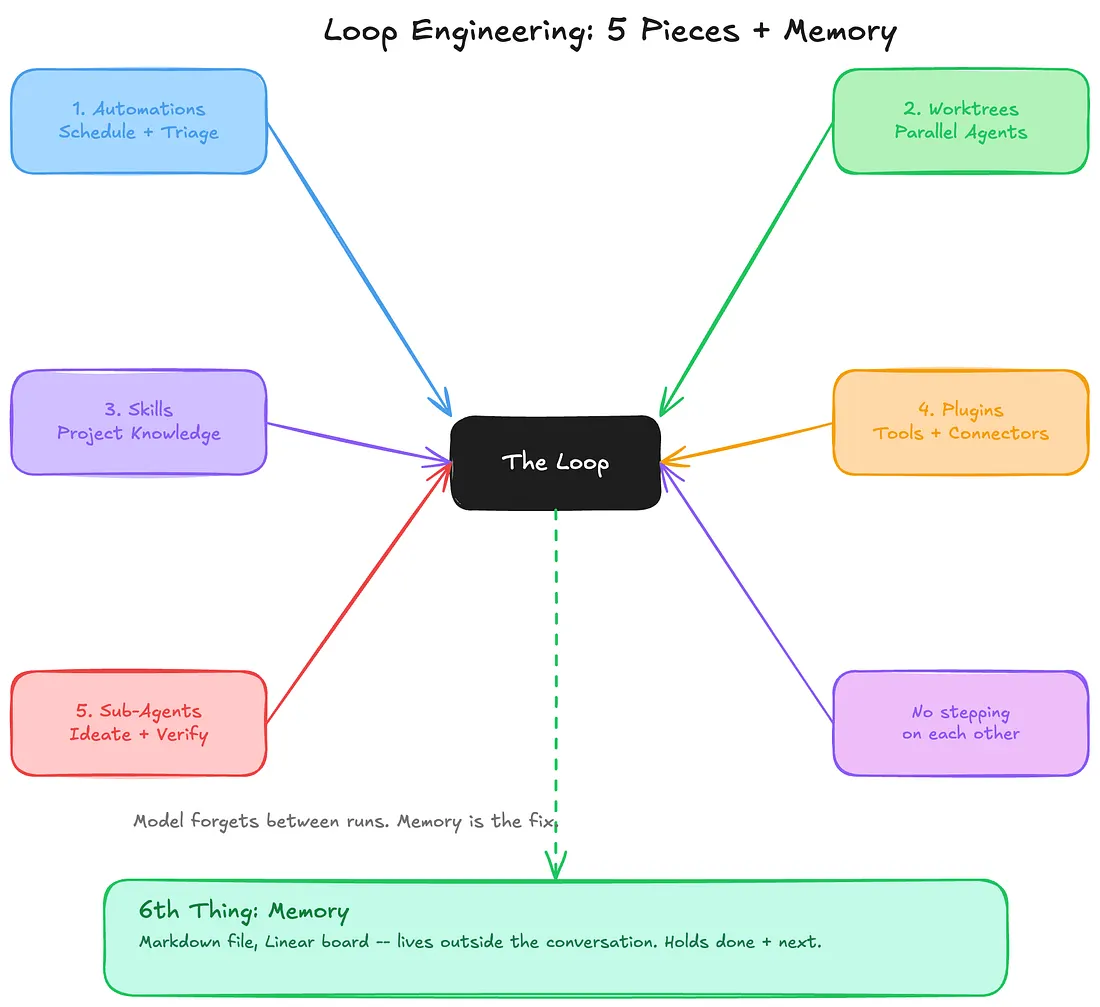
What is Loop Engineering? How it is different than Harness Engineering? | by Akshay Kokane
Revised rules of engineering leadership. | Irrational Exuberance
Interesting set of rules:
- Migrations can be done by an individual rather than a team.
- While 1st-pass code is nearly free, the cost of working code depends on your development harness, and is not free.
- Optimize the base-case of process for agents.
- Durable, high-ownership teams with domain-context are even more important.
- Quick, good, and durable decision-making is a prerequisite to meaningfully benefit from AI.
Software, from First Principles · Faza
Agentic Autonomy Levels - by Addy Osmani - Elevate
I guess I’m just level 3.
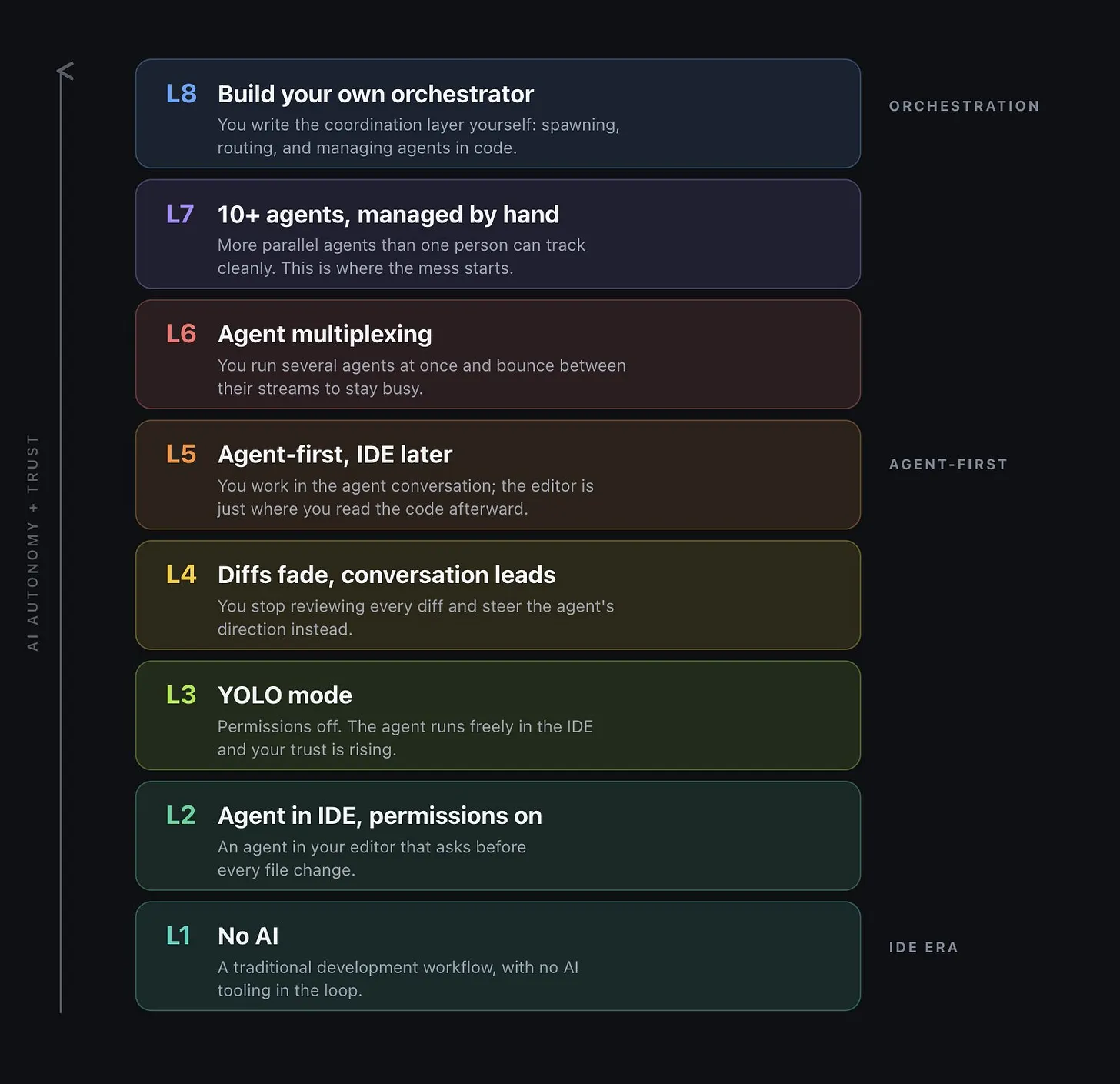
L8 Principal’s Agentic Engineering Workflow - YouTube
Really interesting workflow. Kun Chen created tools that allow him to be on Agentic Autonomy level 8!
When Impressive Performance Gains Do Not Matter
It is a good engineering practice to break pipelines into stages and understand the performance dynamics and limitations of each stage. But many times I have seen engineers disappointed when they improve a single stage by many orders of magnitude only to see it have no effect on the overall throughput. If you are going to make throughput improvements to pipelines, the number that matters is the end-to-end throughput.
Principles — Nabeel S. Qureshi
Another great list.
Fintech Engineering Handbook
Great patterns!
- No invented data. Money can’t be created out of nowhere, so we can’t tolerate duplicates or arbitrary balance updates. We enforce this with idempotency, deduplication, and reconciliation.
- No lost data. Everything that happens to money has to be tracked and persisted. We protect this with full precision, at-least-once deliveries, event sourcing, audit trails, and immutability.
- No trust. Trust neither external providers, internal components, nor the world. We uphold this by verifying webhooks, cross-checking data across sources, and failing loudly on broken assumptions.